Chapter 1
Chapter 1 Quiz
1 Topic | 1 Quiz
Chapter 2
Chapter 2 Quiz
1 Topic | 1 Quiz
Chapter 3
Chapter 3 Quiz
1 Topic | 1 Quiz

The Structure for Effective Business Writing
Effective Business Communication Has 3 Parts
Your business writing becomes a tool for getting things done when you frame your content in this order
Part 1. Business application/significance (State what you want to get done.)
Part 2. Information/explanation (State why or how.)
Part 3. Deadline (Explain urgency.)
Part 1: Business Application/Significance
Examples:
Requests
- Could you move the meeting to April 3rd so the engineering staff can attend?
- Will you send the purchase order number to me so I can place the order?
- Can we transfer Barry to get him on the roster before playoffs?
Recommendations
- I’d like to give the okay to buy a new printer for the support staff.
- I suggest you put the project on hold until we receive our attorney’s opinion.
- We could really improve department morale if we had a decent clean-up hitter.
Conclusions
- We will lower our cost by 17% with this change in specifications.
- The profit rate was found to be fair and reasonable.
- Adding Barry to the roster will certainly increase our run production.
Part 2: Information
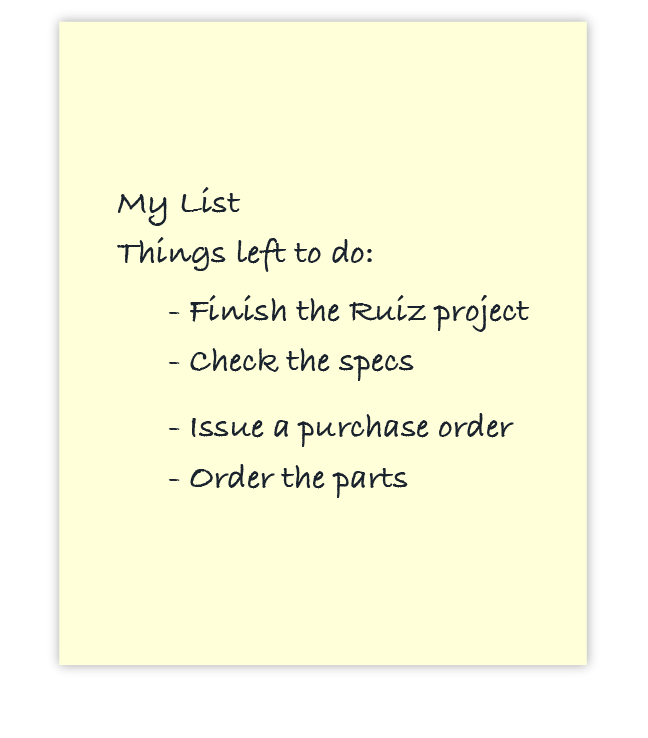
Think of information as a list of key points.
Here are some examples of lists:
- Instructions
- Chronological events
- Requirements
- Supporting Facts
- Reasons/rationale
- Assignments
- Agreements
Part 3: Deadline
This can also be a schedule, timeframe, or urgency.
Examples of deadlines:
- If I get the type changes by Thursday noon, we can get it to the printer on time.
- You’ll need to place the order this week for Jane’s group to remain on schedule.
- We need to have the forms done by the end of the fiscal year.